The brand that belongs somewhere
Why the brands that get expensive to grow are the ones that never belonged anywhere, and what Gymshark did instead.
If someone from your culture can’t tell an ad is yours with the logo covered, you are renting attention, and the rent goes up every year.
I keep seeing the same P&L.
Paid social at thirty per cent of revenue. A blended CAC that was fine two years ago. And somewhere behind it, a number the founder would like to sell the company for in three years, which the P&L can't support, because what they've built is an ad account with a product attached.
At Webtic that's where the first conversation usually starts. Not the logo. The numbers.
These founders are not bad at marketing. Most of them are very good at it. That's the problem. They got very good at the one thing the dashboard could measure, and the thing it couldn't measure quietly stopped happening.
It took me a while to put words on what that thing is. The closest I've got: whether the brand belongs to anything.
I mean that literally. Whether, when a certain kind of person does a certain kind of thing, your name is part of it. Not sold to them. Part of it.
The brand I keep coming back to is Gymshark, mostly because everyone knows it and almost nobody remembers how it started.
In 2012 Ben Francis was nineteen, studying in Birmingham, delivering pizzas at night, and sewing gym clothes in a garage because everything he could buy was too baggy to lift in. He sent the first pieces to the lifters he watched on YouTube. Not a campaign. He just sent them things, because they were his heroes.
Then in 2013 he spent, in his words, every penny the company had on a stand at a fitness expo, "not to get people to come buy our stuff". To be in the room. The lifters came to the stand, the crowd came to the lifters, and the site went from about three hundred pounds a day to thirty thousand in half an hour after the show. He later said he learned more from the people at those events than from anyone in business.
That's the whole thing, I think. Gymshark didn't start by finding a market and advertising to it. It was lifters making clothes for lifters, and it kept turning up wherever lifters already were. Expos where people queued up to six hours in 2016. A pop-up in Toronto in 2018 with lines round the block. A hall in New York in 2024 with seven and a half thousand people lifting for a weekend. Thirteen thousand in London in 2025, tickets free. The company's own line is that they weren't building a community, they were part of one. I've read a lot of brand copy and that's one of the few lines I believe.
What came after is what got me.
People found them without being chased. They were queuing for it.
In the gym, the shark on someone's chest did the work an ad would have done, and the next lifter saw it there, not in a feed. Choosing it, which is different from noticing it. The brand's own people put it plainly: the people who build this brand are the ones who wear it.
The ad budget never became the oxygen. I want to be careful here, because Gymshark does advertise, and pays its athletes, and its chief brand officer calls the events "upper-funnel buzz". It's marketing. The difference is where it sits. The spend fed a culture that was already there, and that culture did most of the carrying. Thirteen years of growth in a row, six hundred and forty-six million pounds last year.
And it became something you could sell. In 2020 General Atlantic paid two hundred million pounds for twenty-one per cent, a valuation of over a billion, and Francis kept more than seventy per cent of the company. This summer he was reported to be in talks to buy some of it back. When the buyer turned up, the thing it was paying for wasn't the ad account. It was that when someone in that culture walks into a gym, the name is already there.
When the buyer turned up, the thing it was paying for wasn’t the ad account.
There's a study I think about more than I'd like to admit. In 2004 a lab at Baylor gave 67 people Coke and Pepsi blind, in a scanner. Blind, preferences split down the middle. Then they showed the Coke label. Preference shifted, and the parts of the brain that lit up were the ones tied to memory. Knowing the brand changed what people tasted. That's what belonging buys.
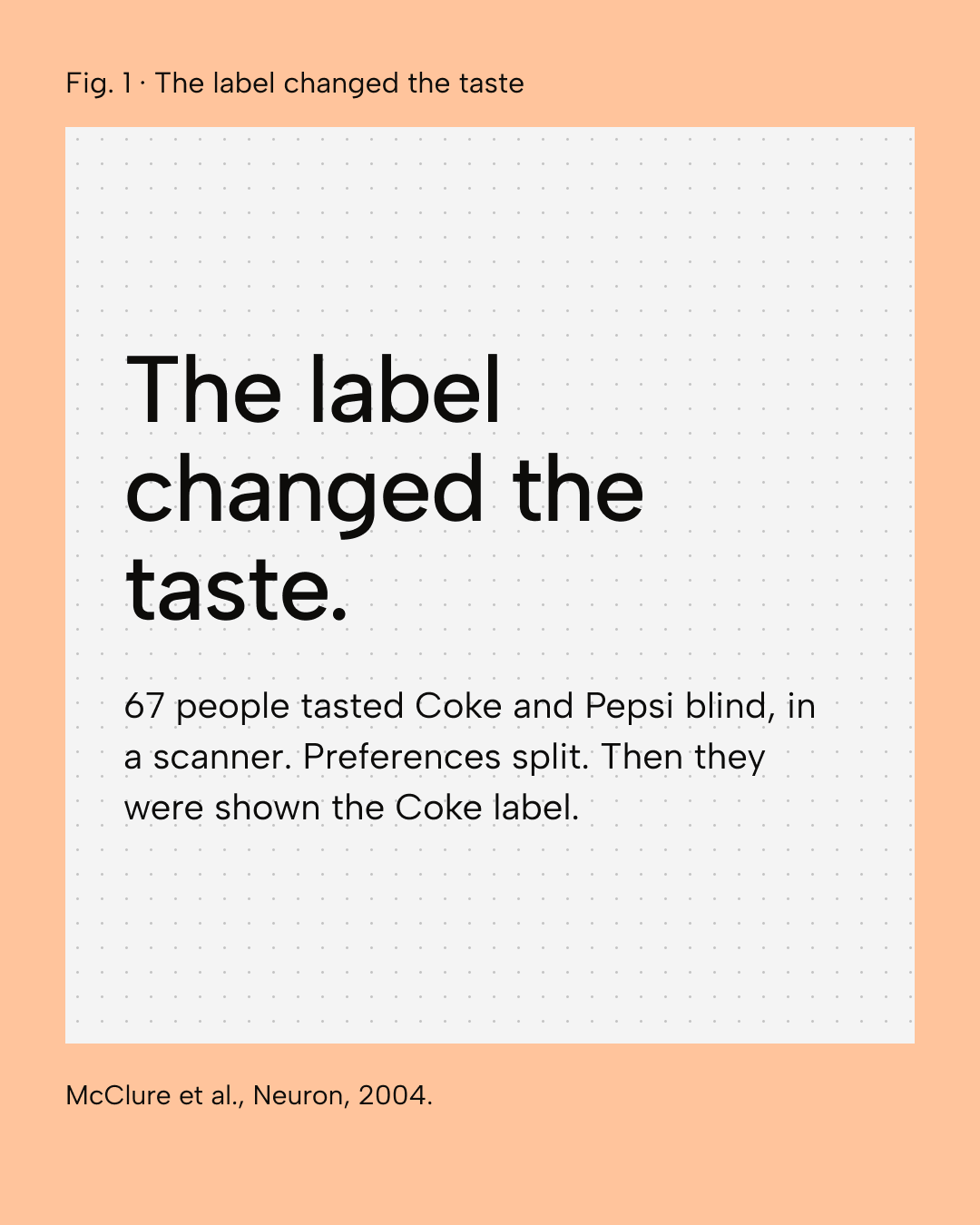
Fig. 1. The label changed the taste. McClure et al., Neuron, 2004.
The marketing numbers say the same thing in a duller way. In 2013 Les Binet and Peter Field went through 996 campaigns and found the companies that grew most split their budgets about 60 to 40, brand to activation. When they went back in 2017, the share of campaigns chasing short-term results had tripled in a decade. Effectiveness had fallen. Not because the ads had got worse. Because people had stopped doing the part that compounds.
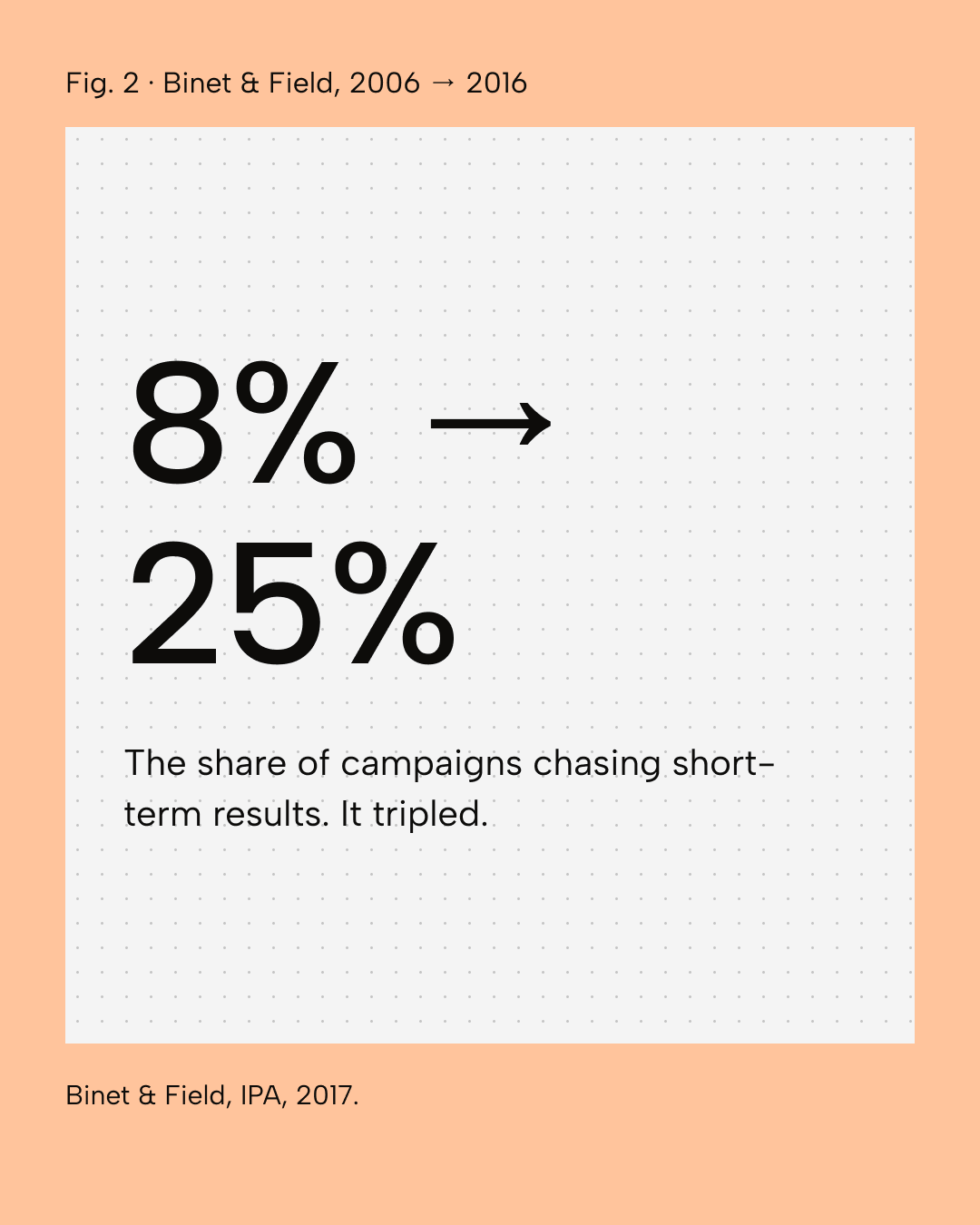
Fig. 2. The share of campaigns chasing short-term results, 2006 to 2016. Binet and Field, IPA, 2017.
Tracksuit and TikTok found that brands with around 60 per cent prompted awareness converted at nearly three times the rate of brands at 20. Similar ads, similar clicks. A different person on the other side of it, because one of them already knew who you were.
And this autumn HelloFresh cut its marketing spend, told the market that new customers had fallen short mainly because of it, and cut its outlook for the year. A business that has to keep buying customers can't stop buying them. That's the P&L I keep seeing, at a much larger scale.
Performance marketing doesn't fail. It gets more expensive every year, for exactly the brands that never belonged anywhere.
If it were my brand, I'd start with a question that sounds too simple. What are people doing when they use this, and who are they doing it with. Not who they are. What they're part of. Gymshark's answer was the gym at six in the morning and the expo on Saturday. Most of the brands I see have an answer like "busy professionals who value quality", which isn't a culture. It's a demographic pretending to be one.
Then I'd ask where that culture already gathers, online and in the real world, and go and stand there. The gym, the race, the shop, the festival that actually fits. For long enough that it looks like I was always there. That's the money the dashboard will call wasted for eighteen months, and I'd have to be the one who refuses to move it.
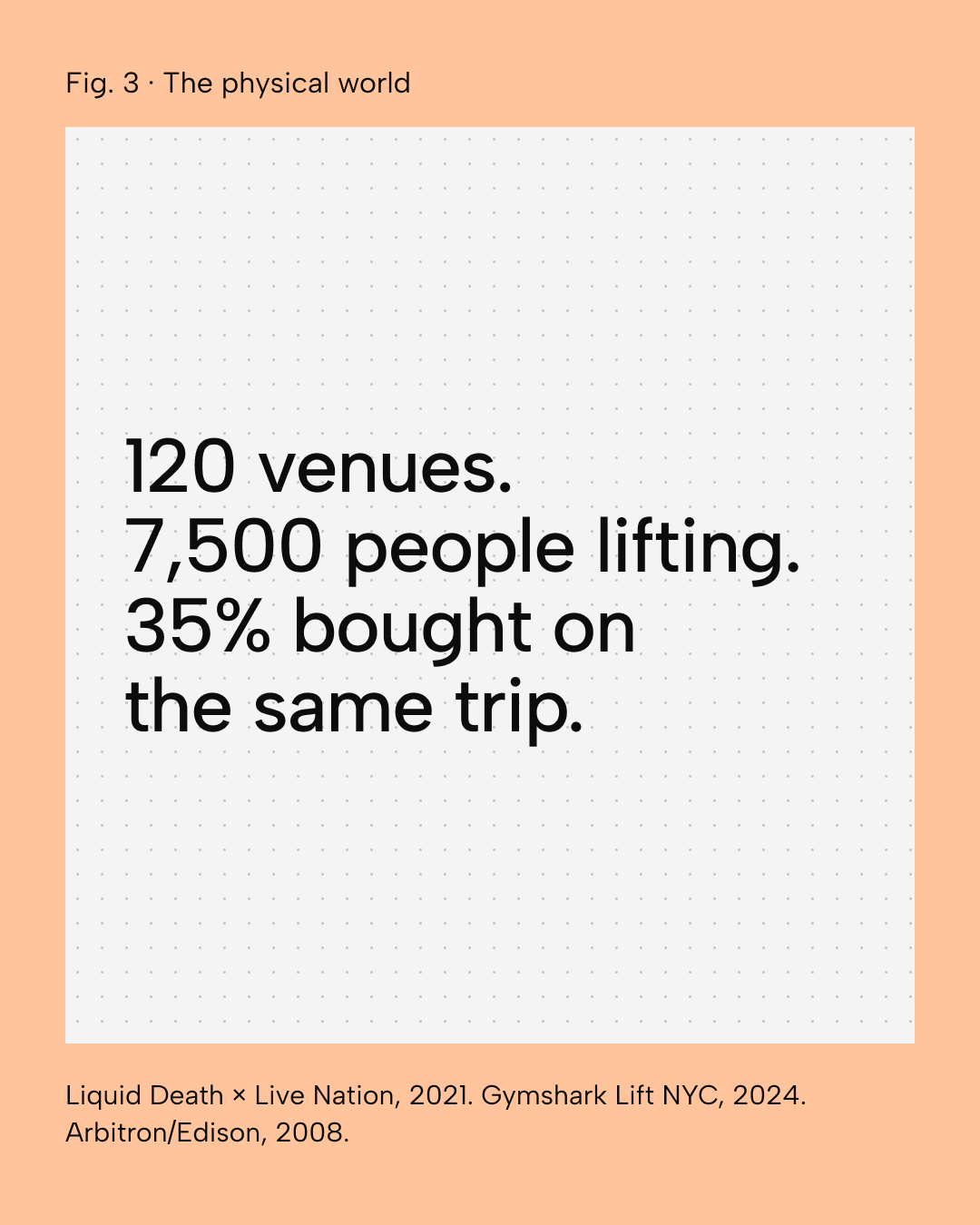
Fig. 3. The physical world. Liquid Death × Live Nation, 2021; Gymshark Lift NYC, 2024; Arbitron/Edison, 2008.
And I'd measure one thing the dashboard doesn't. Cover the logo and show the ad to someone from that culture. If they can't tell it's us, we don't belong yet. We're renting attention, and the rent goes up every year.
I don't know how many of the P&Ls I see still have time to build the thing. Some do. The dashboard won't be the one to tell them.
Sources.
The research and reporting this essay draws on.
Related reading.
The signal you can’t aim
Every audience now hears what a company says to any one of them, and each weighs it differently. A brand can’t stop that. It can prepare for it.
By Matic Zupan · 9 minutes readThe ending is the brand
People don’t remember an experience. They remember its best moment and its last one. Most brands spend their money everywhere else.
By Webtic Studio · 3 minutes readNobody tells a friend about an ad
People talk about what they did, not what they bought. That makes experiences the most efficient media a consumer brand can own.
By Webtic Studio · 3 minutes readCould a stranger tell your ads are yours?
A senior member of the team replies within 24 hours.
The brand that belongs somewhere
Why the brands that get expensive to grow are the ones that never belonged anywhere, and what Gymshark did instead.
If someone from your culture can’t tell an ad is yours with the logo covered, you are renting attention, and the rent goes up every year.
I keep seeing the same P&L.
Paid social at thirty per cent of revenue. A blended CAC that was fine two years ago. And somewhere behind it, a number the founder would like to sell the company for in three years, which the P&L can't support, because what they've built is an ad account with a product attached.
At Webtic that's where the first conversation usually starts. Not the logo. The numbers.
These founders are not bad at marketing. Most of them are very good at it. That's the problem. They got very good at the one thing the dashboard could measure, and the thing it couldn't measure quietly stopped happening.
It took me a while to put words on what that thing is. The closest I've got: whether the brand belongs to anything.
I mean that literally. Whether, when a certain kind of person does a certain kind of thing, your name is part of it. Not sold to them. Part of it.
The brand I keep coming back to is Gymshark, mostly because everyone knows it and almost nobody remembers how it started.
In 2012 Ben Francis was nineteen, studying in Birmingham, delivering pizzas at night, and sewing gym clothes in a garage because everything he could buy was too baggy to lift in. He sent the first pieces to the lifters he watched on YouTube. Not a campaign. He just sent them things, because they were his heroes.
Then in 2013 he spent, in his words, every penny the company had on a stand at a fitness expo, "not to get people to come buy our stuff". To be in the room. The lifters came to the stand, the crowd came to the lifters, and the site went from about three hundred pounds a day to thirty thousand in half an hour after the show. He later said he learned more from the people at those events than from anyone in business.
That's the whole thing, I think. Gymshark didn't start by finding a market and advertising to it. It was lifters making clothes for lifters, and it kept turning up wherever lifters already were. Expos where people queued up to six hours in 2016. A pop-up in Toronto in 2018 with lines round the block. A hall in New York in 2024 with seven and a half thousand people lifting for a weekend. Thirteen thousand in London in 2025, tickets free. The company's own line is that they weren't building a community, they were part of one. I've read a lot of brand copy and that's one of the few lines I believe.
What came after is what got me.
People found them without being chased. They were queuing for it.
In the gym, the shark on someone's chest did the work an ad would have done, and the next lifter saw it there, not in a feed. Choosing it, which is different from noticing it. The brand's own people put it plainly: the people who build this brand are the ones who wear it.
The ad budget never became the oxygen. I want to be careful here, because Gymshark does advertise, and pays its athletes, and its chief brand officer calls the events "upper-funnel buzz". It's marketing. The difference is where it sits. The spend fed a culture that was already there, and that culture did most of the carrying. Thirteen years of growth in a row, six hundred and forty-six million pounds last year.
And it became something you could sell. In 2020 General Atlantic paid two hundred million pounds for twenty-one per cent, a valuation of over a billion, and Francis kept more than seventy per cent of the company. This summer he was reported to be in talks to buy some of it back. When the buyer turned up, the thing it was paying for wasn't the ad account. It was that when someone in that culture walks into a gym, the name is already there.
When the buyer turned up, the thing it was paying for wasn’t the ad account.
There's a study I think about more than I'd like to admit. In 2004 a lab at Baylor gave 67 people Coke and Pepsi blind, in a scanner. Blind, preferences split down the middle. Then they showed the Coke label. Preference shifted, and the parts of the brain that lit up were the ones tied to memory. Knowing the brand changed what people tasted. That's what belonging buys.
Fig. 1. The label changed the taste. McClure et al., Neuron, 2004.
The marketing numbers say the same thing in a duller way. In 2013 Les Binet and Peter Field went through 996 campaigns and found the companies that grew most split their budgets about 60 to 40, brand to activation. When they went back in 2017, the share of campaigns chasing short-term results had tripled in a decade. Effectiveness had fallen. Not because the ads had got worse. Because people had stopped doing the part that compounds.
Fig. 2. The share of campaigns chasing short-term results, 2006 to 2016. Binet and Field, IPA, 2017.
Tracksuit and TikTok found that brands with around 60 per cent prompted awareness converted at nearly three times the rate of brands at 20. Similar ads, similar clicks. A different person on the other side of it, because one of them already knew who you were.
And this autumn HelloFresh cut its marketing spend, told the market that new customers had fallen short mainly because of it, and cut its outlook for the year. A business that has to keep buying customers can't stop buying them. That's the P&L I keep seeing, at a much larger scale.
Performance marketing doesn't fail. It gets more expensive every year, for exactly the brands that never belonged anywhere.
If it were my brand, I'd start with a question that sounds too simple. What are people doing when they use this, and who are they doing it with. Not who they are. What they're part of. Gymshark's answer was the gym at six in the morning and the expo on Saturday. Most of the brands I see have an answer like "busy professionals who value quality", which isn't a culture. It's a demographic pretending to be one.
Then I'd ask where that culture already gathers, online and in the real world, and go and stand there. The gym, the race, the shop, the festival that actually fits. For long enough that it looks like I was always there. That's the money the dashboard will call wasted for eighteen months, and I'd have to be the one who refuses to move it.
Fig. 3. The physical world. Liquid Death × Live Nation, 2021; Gymshark Lift NYC, 2024; Arbitron/Edison, 2008.
And I'd measure one thing the dashboard doesn't. Cover the logo and show the ad to someone from that culture. If they can't tell it's us, we don't belong yet. We're renting attention, and the rent goes up every year.
I don't know how many of the P&Ls I see still have time to build the thing. Some do. The dashboard won't be the one to tell them.
Sources.
The research and reporting this essay draws on.
Related reading.
The signal you can’t aim
Every audience now hears what a company says to any one of them, and each weighs it differently. A brand can’t stop that. It can prepare for it.
By Matic Zupan · 9 minutes readThe ending is the brand
People don’t remember an experience. They remember its best moment and its last one. Most brands spend their money everywhere else.
By Webtic Studio · 3 minutes readNobody tells a friend about an ad
People talk about what they did, not what they bought. That makes experiences the most efficient media a consumer brand can own.
By Webtic Studio · 3 minutes readCould a stranger tell your ads are yours?
A senior member of the team replies within 24 hours.
Start with the moment you’re in
Start a conversation →